

Find Each Sum Or Difference
When distributing binomials over other terms, knowing how to find the sum and difference of the same two terms is a handy shortcut. The sum of any two terms multiplied by the difference of the same two terms is easy to find and even easier to piece of work out — the result is simply the square of the two terms. The middle term just disappears because a term and its opposite are e'er in the middle.
If y'all run into the same two terms and just the sign between them changes, residuum assured that the result is the square of those two terms. The second term volition always be negative, equally in the example,

Example 1: (x – 4)(x + 4)
You can use the shortcut to do these special distributions.

The second term will e'er be negative, and a perfect foursquare similar the first term: (–iv)(+4) = –16.

Case ii : (ab – 5)(ab + 5)
Try the same piece of cake process — multiplying the sum of two terms with their difference — with this slightly more complicated, variable term.

The second term is negative, and a perfect square similar the first term: 5 = –25.

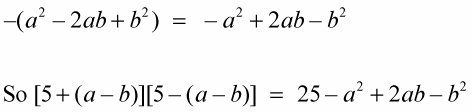
Example 3 : [5 + (a – b)][5 – (a – b)]
This case offers you lot a chance to piece of work through the sum and departure of various groupings.
The square of 5 = 25
The 2nd term is negative, and a perfect foursquare like the first term:

Square the binomial and distribute the negative sign, which looks like this:
Near This Article
This article can be found in the category:
- Algebra ,

Find Each Sum Or Difference,
Source: https://www.dummies.com/article/academics-the-arts/math/algebra/finding-the-sum-and-difference-of-the-same-two-terms-194266/
Posted by: martineztherlon84.blogspot.com
0 Response to "Find Each Sum Or Difference"
Post a Comment